

Low-Effort Habits for Low-Willpower Days
For women tired of earning their right to rest.

It’s January. We’re sick of the gym ads already. And no, I don’t want your weight-loss miracle cure / supercharged skip-this-at-your-peril fitness routine / to know the actual steps you took to ultra-self-optimised productivity-hacking mastery.
Urgh.
In our northern hemisphere, it’s really dark outside, it’s most likely rainy, it’s cold, and hibernation mode isn’t just for bears. This isn’t the time or place for goal-setting new-me bollocks. It’s just not.
And yet.
For most of the women reading this, we’ve built our entire sense of safety, worth, and belonging on being useful, good, capable, and emotionally available.
Not to mention our wild attempts over the decades to be this body shape, and to look like her.
No wonder we’re lacking willpower. The way we serve, support, and are seen in the world has been propping up our sense of worth for years and we’re fucking tired of it all.
January ads are just poking at that part of us that wants to continue all the plate-spinning, all the people-pleasing, all the fitting into the boxes we think society needs us to fit into in order to be worthy, acceptable, and enough.

The invisible contract we’re living by
We’ve ended up internalising a quiet but brutal rulebook:
Be competent.
Be pleasant.
Don’t be too much.
Don’t need too much.
Don’t rest unless you’ve earned it.
Don’t complain — you chose this life.
Hold it together.
Carry the emotional load.
Make it work.
And look pretty while you do it.
We didn’t consciously choose this.
We’ve been trained into it by family dynamics, society, capitalism, the patriarchy, hustle culture, and praise that came only when we performed well.
And because of it, we’re anxious. We struggle to sleep really well. We struggle to rest and instead just end up collapsing. We’re overwhelmed and stressed and exhausted and wondering if this is just the cost of being an adult in a modern world.
But this stuff isn’t inevitable.
And it ends with us.
This is a call for a wider, brighter, more joyful life. But in the meantime, because I know how hard that is to picture sometimes, let’s find ourselves some relief.
This isn’t just nervous system regulation; this is a stand for a world in which this invisible contract no longer holds us back from living our magic.
How to find relief (the low-effort habits that will help)

These are habits:
that remind your nervous system it doesn’t have to earn safety
for days when performance is off the table
that don’t ask you to override yourself.
Just choose one today if that’s all you got. That’s enough. And it’ll help, I promise.
1. The one-minute thing.
On low-willpower days, I default to my bare-minimum morning routine.
Sometimes that means one stretch. Sometimes one conscious breath. Sometimes just sitting on the edge of the bed and putting my feet on the floor.
It takes about a minute. Two, if I’m feeling extravagant.
What matters is not what I do, but that my nervous system gets the message: we are here, and we are not being abandoned.
I show up, do something on purpose (feel my toes in the carpet, notice my breathing, say hello to my exhaustion), and allow it to be here for one single minute.
This is a giant and much-needed permission to do less that we can give ourselves. Once we start our days with this energy, it can support us as we go about our things, too.
2. Music before thought
Music is one of the greatest regulators I know. It bypasses logic, it skips the inner negotiation, it goes straight to the body (which is how we regulate, by the way. This isn’t a thought-process but a felt one).
On days when I don’t want to get up, I don’t tell myself to get up. I put on a song I love. One that lives somewhere in my bones and makes me feel things.
Most of the time, that’s all I need to shift me from frozen to slightly thawed. It gets me out of bed, and it can even change my emotional weather by a few degrees.
You don’t need a playlist for productivity or focus. You need something that reminds your system that pleasure still exists.
3. Watching TV on purpose
I think TV gets a bad rap.
On low-willpower days, I use it as a regulation tool. The key is this: I watch it on purpose. I’m not scrolling at the same time. I’m not half-watching while berating myself for resting. I’m not watching something totally shit.
I choose something I’m actually into. Something absorbing and entertaining and that makes me feel things.
There’s a difference between numbing out vs letting your nervous system settle. One feels frantic. The other feels like exhaling.
If your body softens while you’re watching, it’s probably doing something useful.
Recently, my jam has been Black Sails (I didn’t get the memo when it first came out). I bloody love it and I have an enormous crush on Captain Flint (and Billy Bones, and Long John Silver 🫠).
4. Reading purely for pleasure
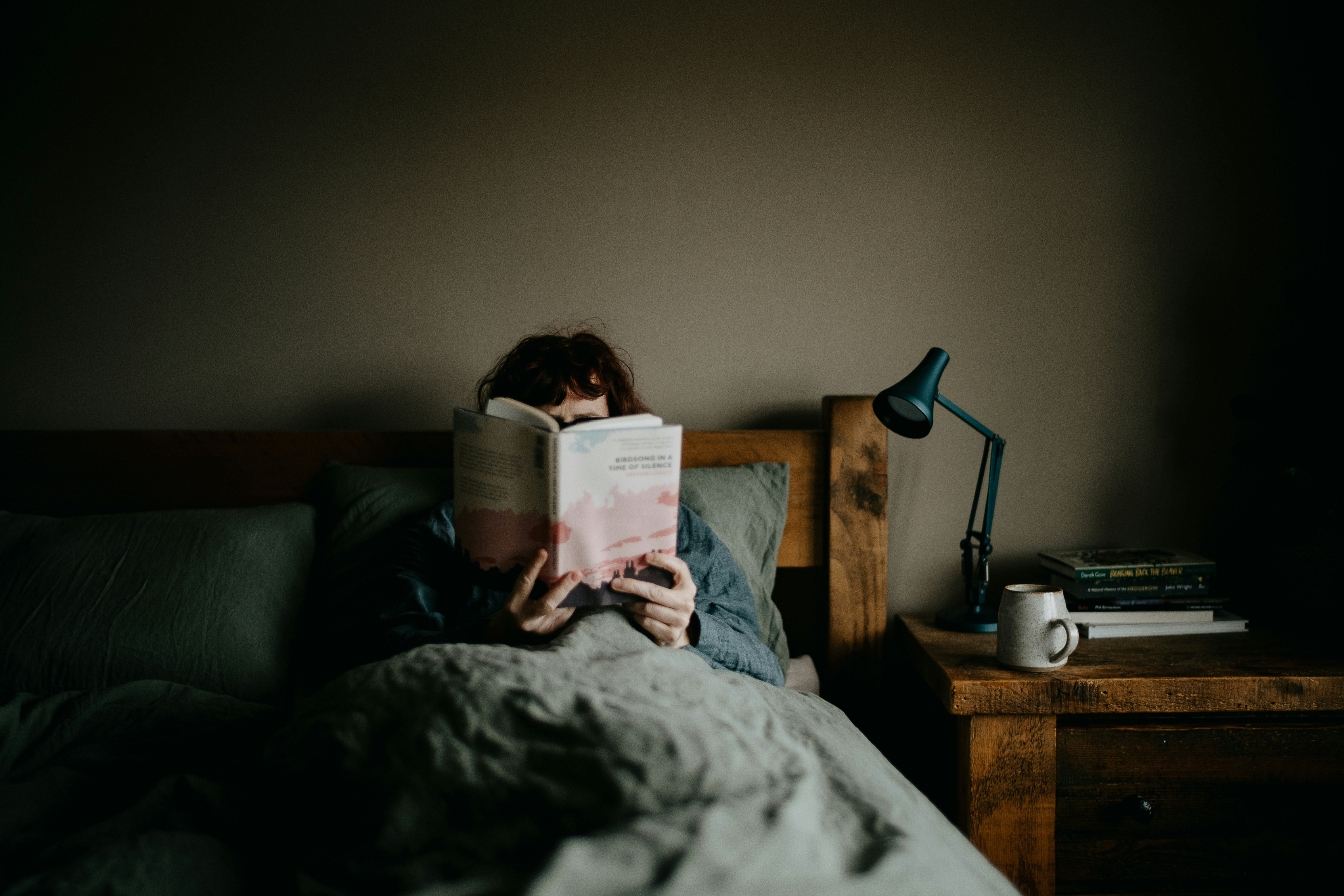
On low-willpower days, I do not read books that are meant to improve me. And this took me a LONG time to get into. I remember a girlfriend a few years ago baulking at my admission that I only really read non-fiction. I was bettering myself, I told her. I was in the school of constant fucking improvement. And honestly I’m still healing from damage that’s done me.
Now, I realise the importance of fiction. Really good fiction. Novels I can fall into. Old favourites I’ve already read twice.
This is not the time for the book you feel you should read. This is the time for the book you actually want to read (Fourth Wing, anyone?).
Let yourself be absorbed. Let your attention rest somewhere that isn’t your own mind for a while. This wholly and absolutely counts as care with knobs on.
5. Lowering the bar until it’s reachable
This might be the most important habit of all.
On low-willpower days, I actively lower the bar. I decide in advance that today is not the day I become a better version of myself, improve this thing, work towards this mission. Today is the day I stay on my own side and give myself the break I’d advise a friend in my position.
That might look like:
Feeding myself something easy, not insta-worthy or dietician-approved
Replying to fewer messages, or absolutely none
Cancelling one non-essential thing, or saying no to efforting
Doing the smallest possible version of whatever needs doing
Relief often arrives not when we push harder, but when we stop asking the impossible of ourselves and let it all be enough. This isn’t losing a battle with ‘productivity’, but it’s a total opt out of that internal war in the first place.
6. Gentle sensory anchors
When everything feels like too much, I come back to the senses.
A hot shower.
A heavy jumper.
A mug of something warm held in both hands.
Feet on the floor.
Sunlight through a window.
These aren’t solutions. They’re anchors. They remind the body that it exists in the present moment, not just inside a spiral of thoughts.
You don’t need to fix your life. You just need a small signal of safety.

7. Letting enough be enough
Low-willpower days don’t need to be conquered, they need to be accompanied.
The most regulating thing I can often say to myself is: this is enough for today.
Enough care.
Enough effort.
Enough showing up.
Mental health isn’t built through heroic discipline. It’s built through small, repeatable moments of self-support, especially when discipline isn’t available.
These are lived, adaptable ways of supporting yourself through real life, real cycles, and real exhaustion.
No rules or performance, just interoception (our ability to feel internally, read more about that here) and responding accordingly.
If you take away only one thing from this word-waffle of mine today, let it be this: your physical and emotional state is telling you something, is asking you something.
Responding to that state is how we regulate, self-care, and life a more mindful life.
If your sense of safety has been built on being useful, capable, and emotionally available, no wonder you’re so damn tired all the time.
You’re not broken, your nervous system is just overwhelmed. And there is a way back.
You don’t need motivation, you just need regulation. Joy Unplugged helps you get there.